गPune Ganeshotsavnaad.live

Honour route · Pune 2026

5 Manache Ganpati — Pune Honour Route

मानाचे गणपती

Five mandals. One order of respect. The city’s Ganpati walking route.

Updated

Type
Manache Ganpati honour sequence
City
Pune
Visit order
1. Kasba → 2. Tambdi Jogeshwari → 3. Guruji Talim → 4. Tulshibaug → 5. Kesari Wada

Manache Ganpati (मानाचे गणपती) are the five Pune mandals that receive first respect in the city’s public Ganeshotsav tradition. The correct visit order is Kasba Ganpati, Tambdi Jogeshwari, Guruji Talim, Tulshibaug, and Kesari Wada. “Manache” means “of honour” — not most famous and not biggest crowd. Shreemant Dagdusheth Halwai Ganpati is widely visited but is not one of the five.

The walking circuit through the old peths is roughly 2–3 km. Without queues it takes about 30–45 minutes; with festival darshan queues plan 3–5 hours. Early mornings (6–8 AM) are quieter than 6–10 PM peak. When you walk this order you follow the same chronology Pune has kept for generations — especially meaningful on and after . For metro stations and road closures see the traffic & metro page; for the full festival overview see the Pune Ganpati guide.

Walking route through old Pune peths. Verify timings each year — aagman clocks change.

What is the correct Manache visit order?

Walk these five in order. Optional add-ons such as Dagdusheth or Bhausaheb Rangari sit near the circuit but are outside the honour sequence.

OrderMandalRoleArea
1Kasba GanpatiManacha pahila · gramadaivatKasba Peth
2Tambdi Jogeshwari GanpatiManacha 2Budhwar Peth
3Guruji Talim GanpatiManacha 3Budhwar Peth
4Tulshibaug GanpatiManacha 4Laxmi Road
5Kesari Wada GanpatiManacha 5Kesari Wada
—Dagdusheth Halwai (optional)Not a ManachaBudhwar Peth

0 of 5 visited

Track your honour walk locally — no account needed

0%

  1. Manacha 1

    Kasba Ganpati

    Kasba Peth · Est. 1893

    Verified

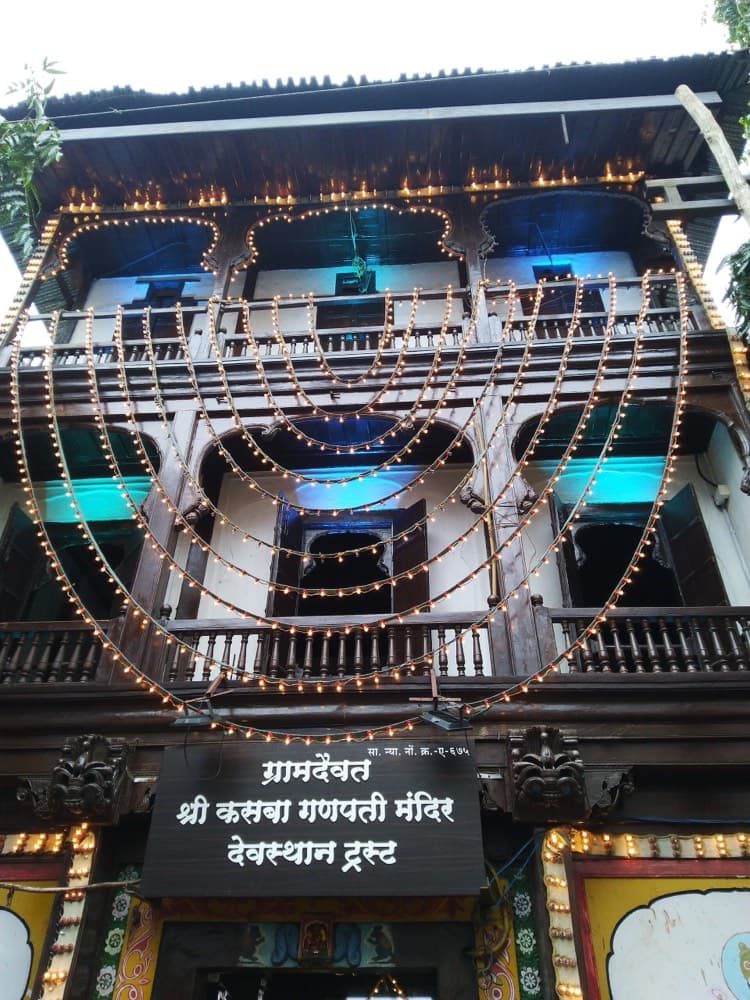
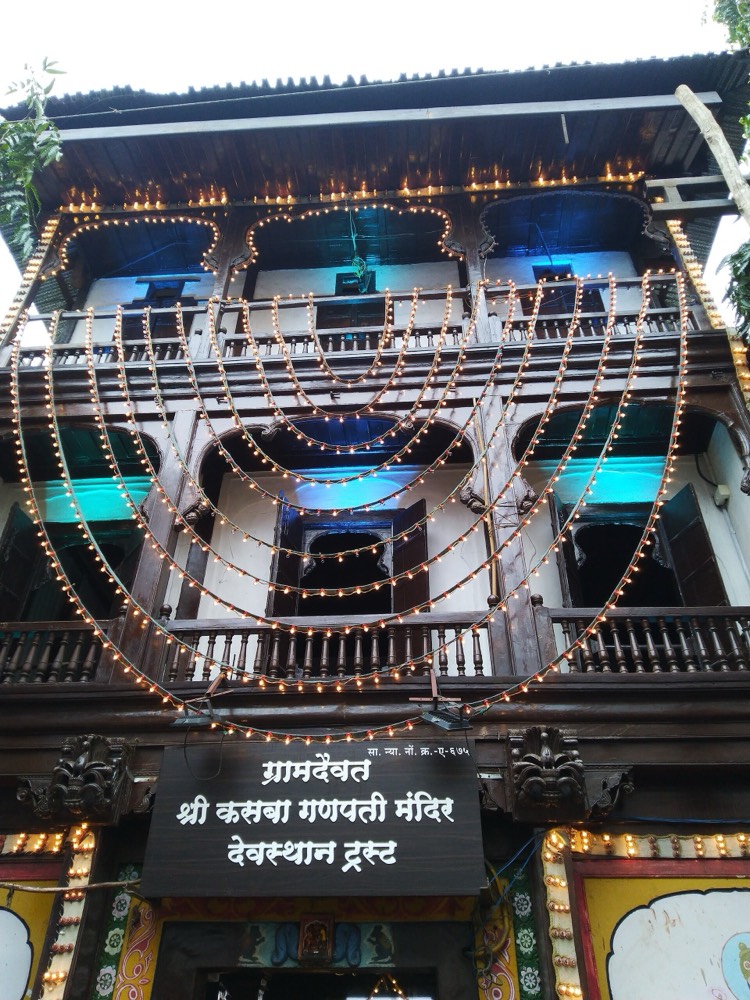
    The presiding deity of Pune — Gramadevata of the old city. Every Manacha Ganpati visit begins here, before any other mandal receives honour.

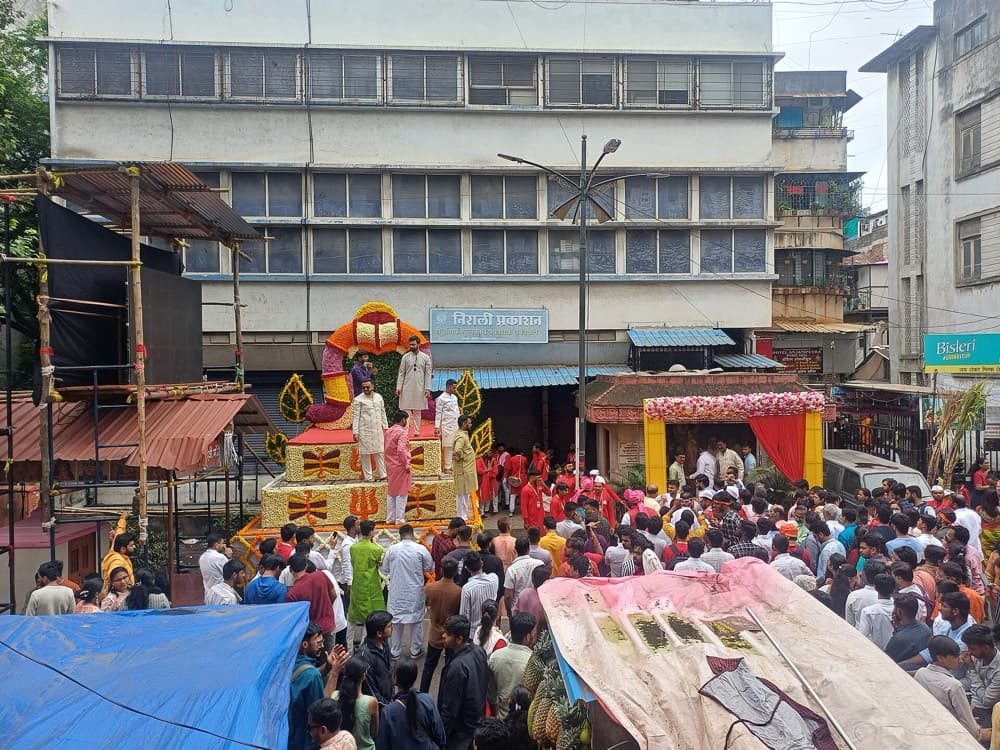
    Kasba Ganpati is where Pune’s public Ganeshotsav starts in spirit. The temple itself goes back to the 1630s, when Jijabai Bhosale commissioned it around a swayambhu idol discovered as she rebuilt Pune with young Shivaji. When the sarvajanik festival was organised in 1893, Lokmanya Tilak gave the city’s Gramadevata the first honour — a rank held ever since. When Kasba receives the first aagman on Ganesh Chaturthi, Punekars understand the festival has officially begun. Respect the order, and you respect the city.

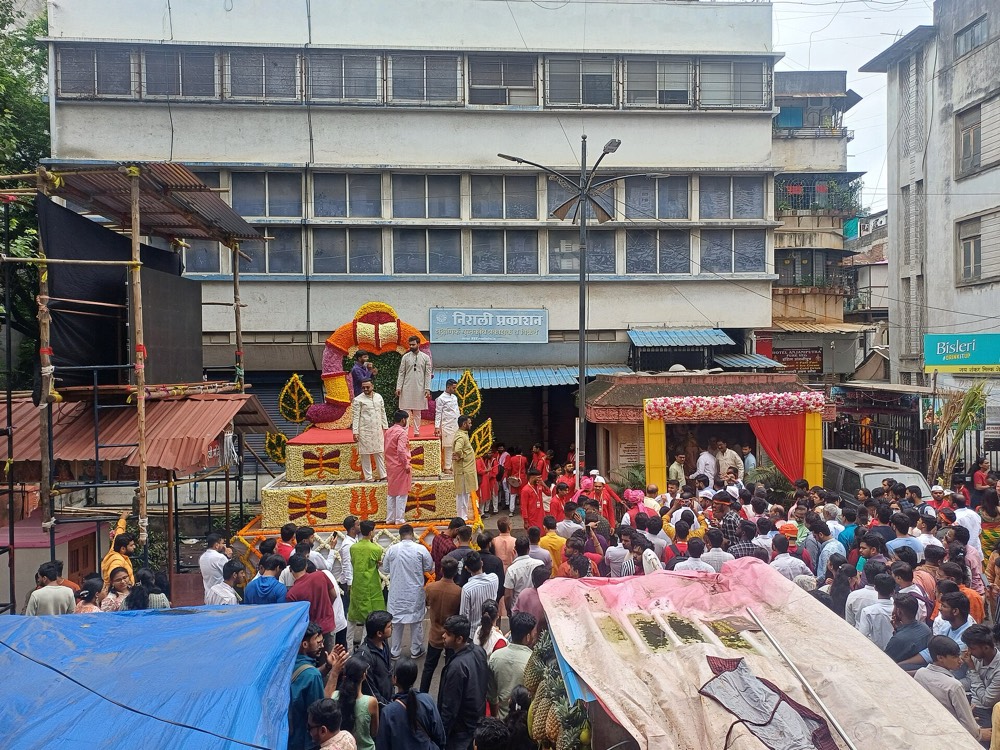
    Aagman Sohala on Ganesh Chaturthi — timing varies each year; treat listed clocks as approximate until verified on a trust page. 2026 aagman featured Prabhat Band with Sangharsh, Shaurya and Dnyanaprabodhini (press) — Ramanbaug was not named. The visarjan procession of the city begins with this Ganpati. Vidya Ganesh 2026 continues the mandal’s student-adoption work alongside the festival.
    Open profileMaps
  2. Manacha 2

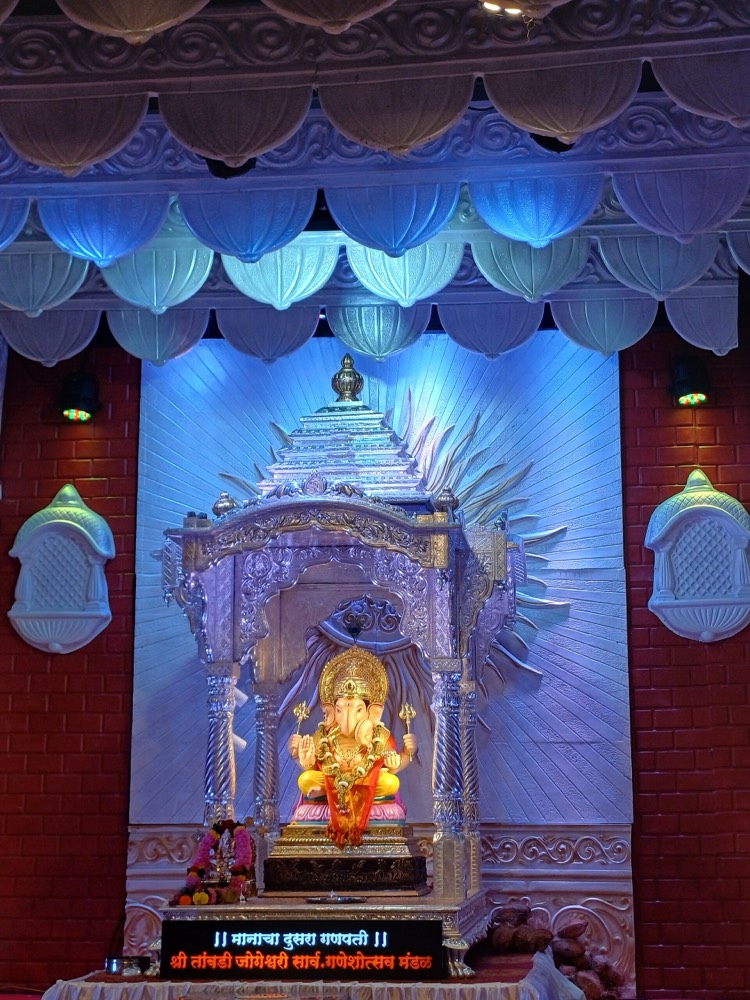
    Tambdi Jogeshwari Ganpati

    Budhwar Peth · Est. 1893

    Verified

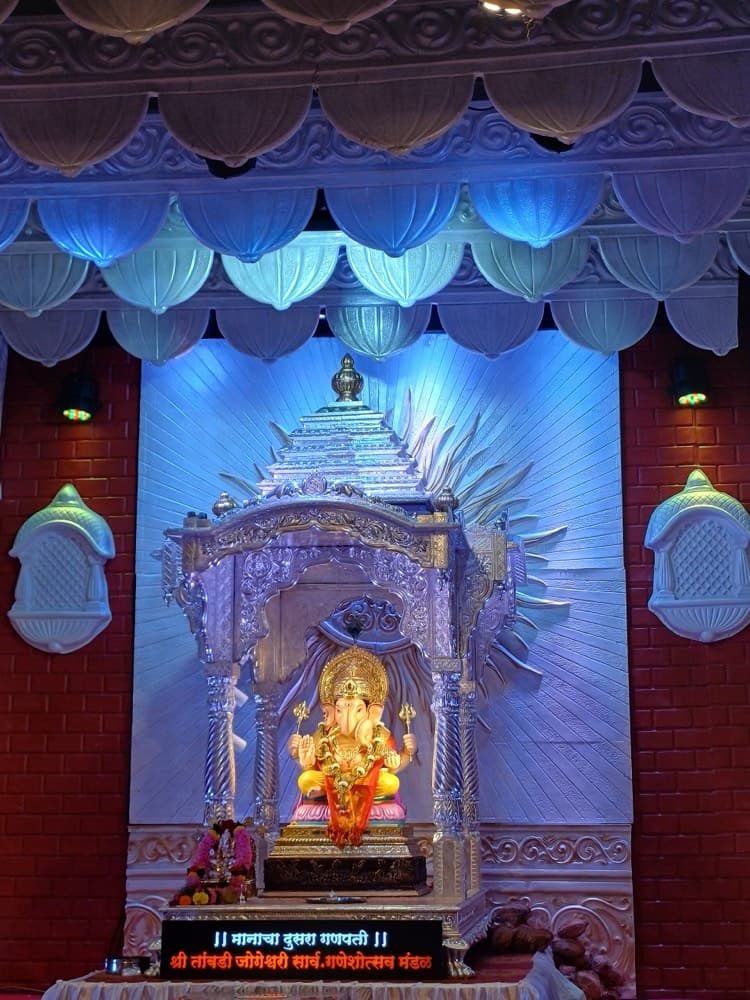
    The second Manacha Ganpati — named for Tambdi Jogeshwari, the goddess whose temple has anchored Budhwar Peth long before the sarvajanik mandals rose around her.

    After Kasba comes Tambdi Jogeshwari — celebrating sarvajanik Ganeshotsav since 1893, the festival’s very first year. Lokmanya Tilak himself gave the mandal second honour because of its bond with the red-stone temple of Pune’s Gramdevi. The mandal keeps a rare tradition: the Ganesha idol is fully immersed at the end of every Ganeshotsav and a new one consecrated the following year. In the honour sequence, second place is not secondary; it is the city acknowledging the goddess who watched over these lanes before Ganpati processions filled them.

    Second in the Manacha visit sequence after Kasba Ganpati. A new idol is installed every year — a tradition unique among the Manache. 2026 dekhava: Tuljabhavani temple replica (post-aagman press).

    Open profileMaps
  3. Manacha 3

    Guruji Talim Ganpati

    Budhwar Peth · Est. 1887

    Verified

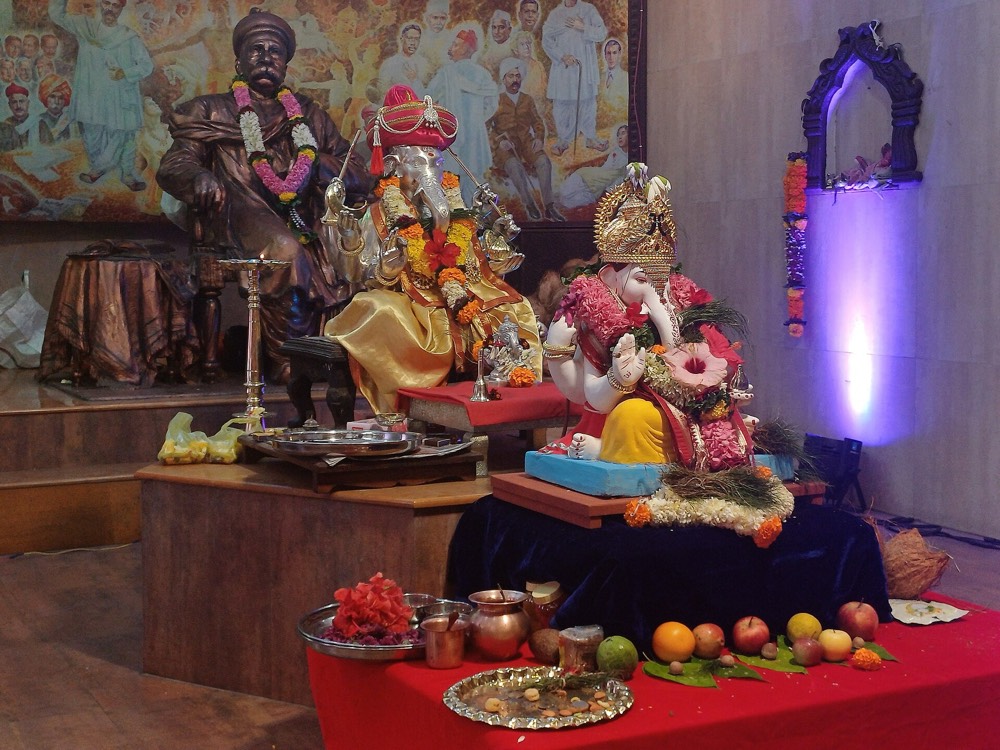
    The third Manacha Ganpati — born from a talim tradition in 1887, before the sarvajanik festival itself, and a lasting symbol of Hindu–Muslim unity.

    Guruji Talim predates even Tilak’s sarvajanik movement. Established in 1887 by two Hindu and two Muslim families — the households of Bhiku Pandurang Shinde and Ustad Nalband — it takes its name from the wrestling gymnasium where the celebration began. Third in the Manache sequence, this mandal reminds visitors that the festival was never only about idols; it was about communities choosing to come together in public. Its story of communal harmony is retold in Pune every September.

    Third Manacha stop. Known for disciplined processions and talim heritage. 2026 dekhava: Puri Jagannath temple replica; pranpratishtha by Punit Balan & Janhvi Dhariwal-Balan (post-aagman press).

    Open profileMaps
  4. Manacha 4

    Tulshibaug Ganpati

    Laxmi Road · Est. 1901

    Verified

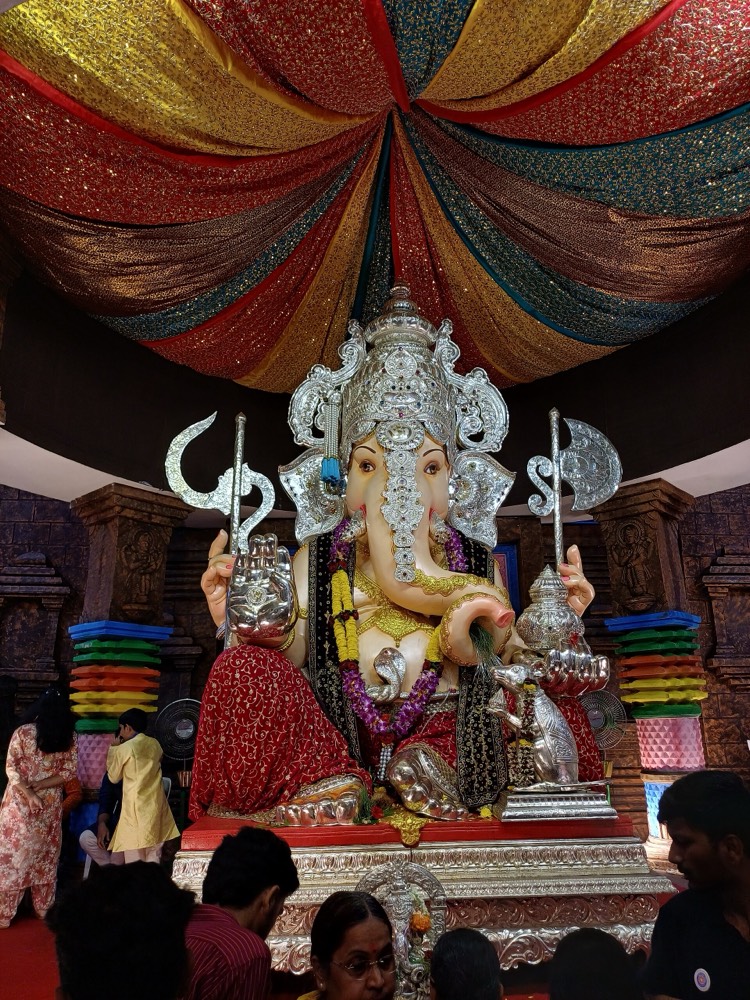
    Fourth among the Manache Ganpati — a Laxmi Road landmark famous for the tallest idol among the honoured five and a visarjan miravnuk that defines the festival’s final night.

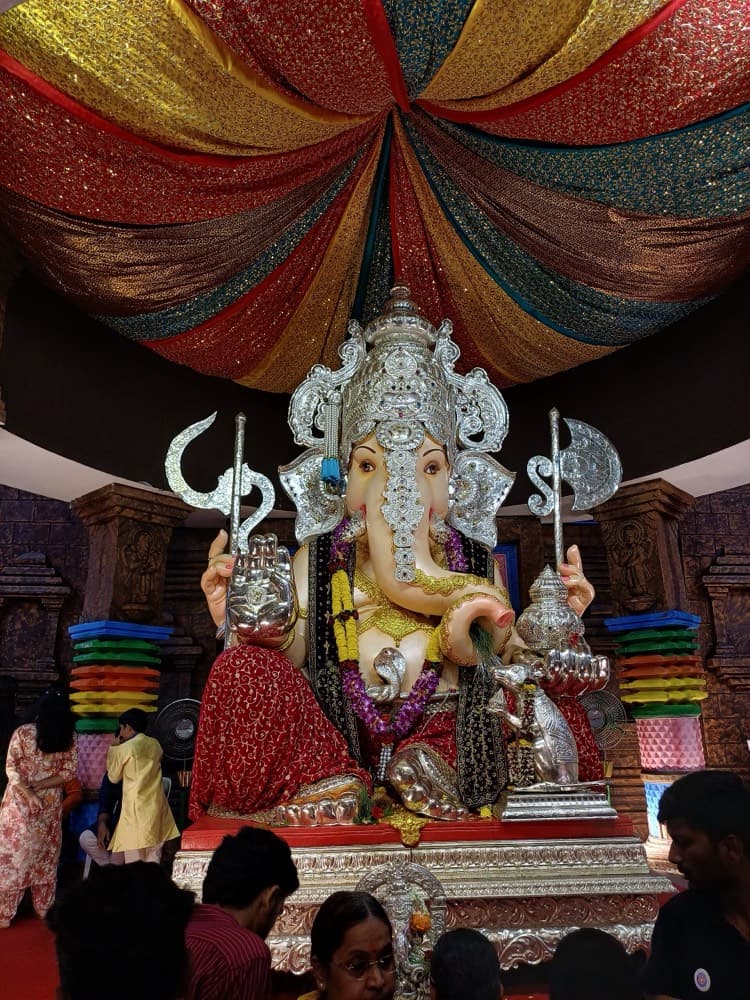
    Tulshibaug sits where old Pune’s shopping streets meet devotional spectacle. Established in 1901 and granted fourth honour in 1950 for the religious importance of the Tulshibaug precinct, the mandal made history in 1975 when sculptor D. S. Khatavkar created a 15-foot fibreglass idol — the first of its kind. Today’s idol stands around 13 feet, adorned with over 80 kilograms of ornaments. You may pass this lane for groceries in August and return in September to find it transformed; the miravnuk here is the sound many Punekars call the emotional peak of the festival.

    Fourth Manacha visit. Visarjan miravnuk is a flagship moment of Pune Ganeshotsav. 2026 dekhava: Brahmanaspati temple decoration with charansparsha arrangement for devotees (post-aagman press).

    Open profileMaps
  5. Manacha 5

    Kesari Wada Ganpati

    Kesari Wada · Est. 1894

    Verified

    The fifth Manacha Ganpati — Lokmanya Tilak’s own utsav, begun in 1894 and still celebrated at Kesari Wada as civic awakening in devotional form.

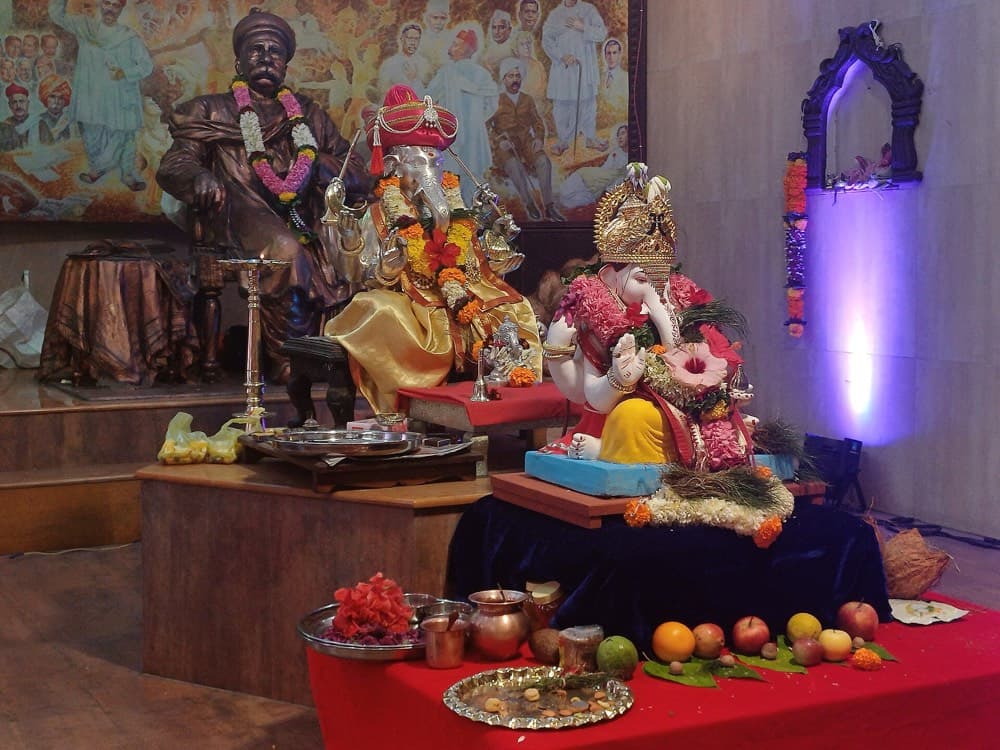
    Kesari Wada connects Ganeshotsav to Pune’s political and cultural awakening. Tilak began his own sarvajanik Ganeshotsav in 1894, and the celebration later settled at Kesari Wada — home of his newspaper Kesari. Fifth honour completes the Manache sequence — not an afterthought, but the closing note of a protocol every serious visitor learns. Exhibitions on Tilak and the freedom movement often accompany the festival, keeping his vision of the utsav as a unifying public act alive in the crowds that gather here each year.

    Fifth and final Manacha Ganpati in the traditional honour order. 2026: 133rd year; pranpratishtha by Dr Raunak Rohit Tilak; aagman from Ramanbaug Chowk with traditional sanai-chaughada and dhol-tasha (post-aagman press). Exact clocks still press-only — verify on the day.

    Open profileMaps

Manache Ganpati FAQ

Common questions about Pune's honour route and visit order.

What are the 5 Manache Ganpati in Pune?
The 5 Manache Ganpati (मानाचे गणपती) are: 1. Kasba Ganpati, 2. Tambdi Jogeshwari, 3. Guruji Talim, 4. Tulshibaug, and 5. Kesari Wada. These five mandals receive first respect in Pune's public Ganeshotsav tradition and are visited in this specific order of honour.
What is the correct visit order for Manache Ganpati?
The correct order is: 1. Kasba Ganpati (the city's Gram Daivat), 2. Tambdi Jogeshwari, 3. Guruji Talim, 4. Tulshibaug, and 5. Kesari Wada. This sequence reflects historical precedence, not crowd size or popularity. Walking them in order honours Pune's tradition.
Is Dagdusheth Halwai Ganpati a Manacha?
No, Shreemant Dagdusheth Halwai Ganpati is not one of the five Manache. While Dagdusheth is one of Pune's most famous and visited mandals, the Manache honour sequence predates it. Many visitors combine a Dagdusheth visit with the Manache route since both are in the old city.
How long does it take to walk the Manache Ganpati route?
The walking route through all five mandals is approximately 2–3 km. Without queue time, walking takes about 30–45 minutes. With darshan queues during peak festival days (especially evenings), plan 3–5 hours. Early mornings (6–8 AM) have shorter queues.
What is the best time for Manache darshan in 2026?
For shorter queues, visit early morning (6–8 AM) or late night (after 11 PM). Avoid evenings from 6–10 PM when crowds peak. Weekday mornings during the festival have lighter crowds than weekends. Ganesh Chaturthi day itself is extremely crowded at all times.
What does 'Manache' mean?
'Manache' (मानाचे) means 'of honour' or 'of respect' in Marathi. It does not mean 'most famous' or 'biggest crowd.' The five Manache Ganpati receive first respect in Pune's Ganeshotsav tradition — every other procession and pathak route ultimately orbits this sequence.

Procession times and aagman clocks shift every year. 2026 visarjan immersion times are archived on the visarjan guide; confirm next season's notices with each mandal. We mark confidence and sources on linked performances where available.