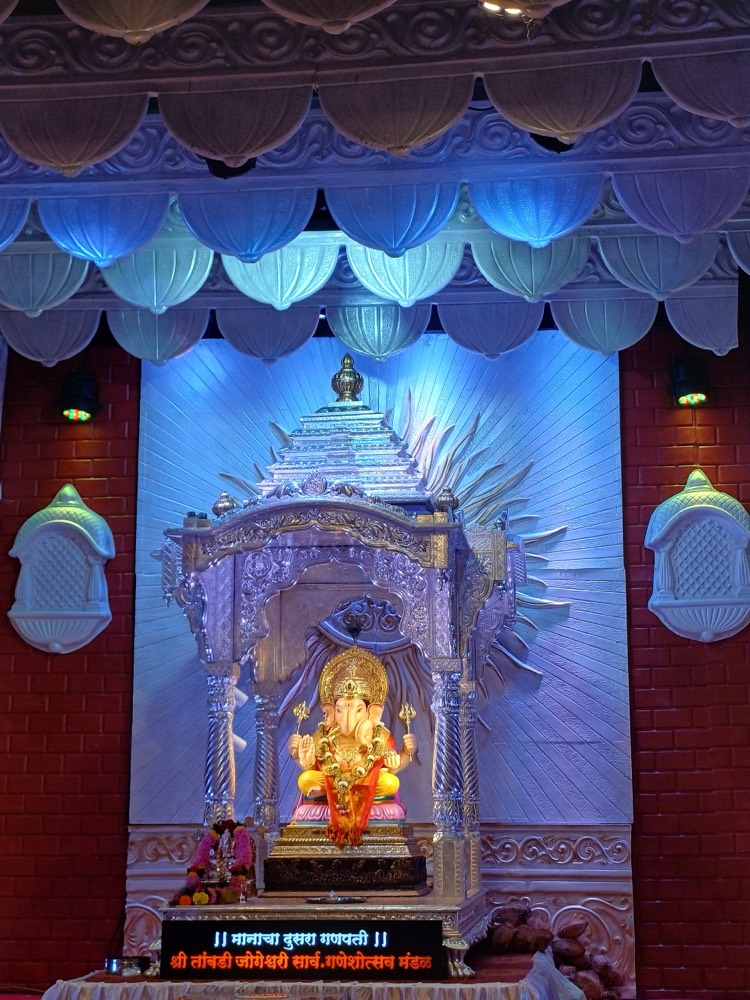
Tambdi Jogeshwari Ganpati
Budhwar Peth · Manacha 2
ManachaVerified
The second Manacha Ganpati — named for Tambdi Jogeshwari, the goddess whose temple has anchored Budhwar Peth long before the sarvajanik mandals rose around her.
Pune
Budhwar Peth holds the densest stretch of the festival — Dagdusheth and Tambdi Jogeshwari draw the city's largest darshan queues, and the lanes between them stay lit and loud for all ten days.
Mandals and pathaks in Budhwar Peth, with visit notes, listed performances, and neighbourhood context for the festival.
Arrive via PMC or Deccan Metro and walk in — Mandai is better for the return. Expect the longest queues at Dagdusheth and Tambdi Jogeshwari; go before 8 AM or after 11 PM if you want shorter waits.
See the first-time visit guide and metro & traffic notes.
Budhwar Peth · Manacha 2
The second Manacha Ganpati — named for Tambdi Jogeshwari, the goddess whose temple has anchored Budhwar Peth long before the sarvajanik mandals rose around her.
Budhwar Peth · Manacha 3
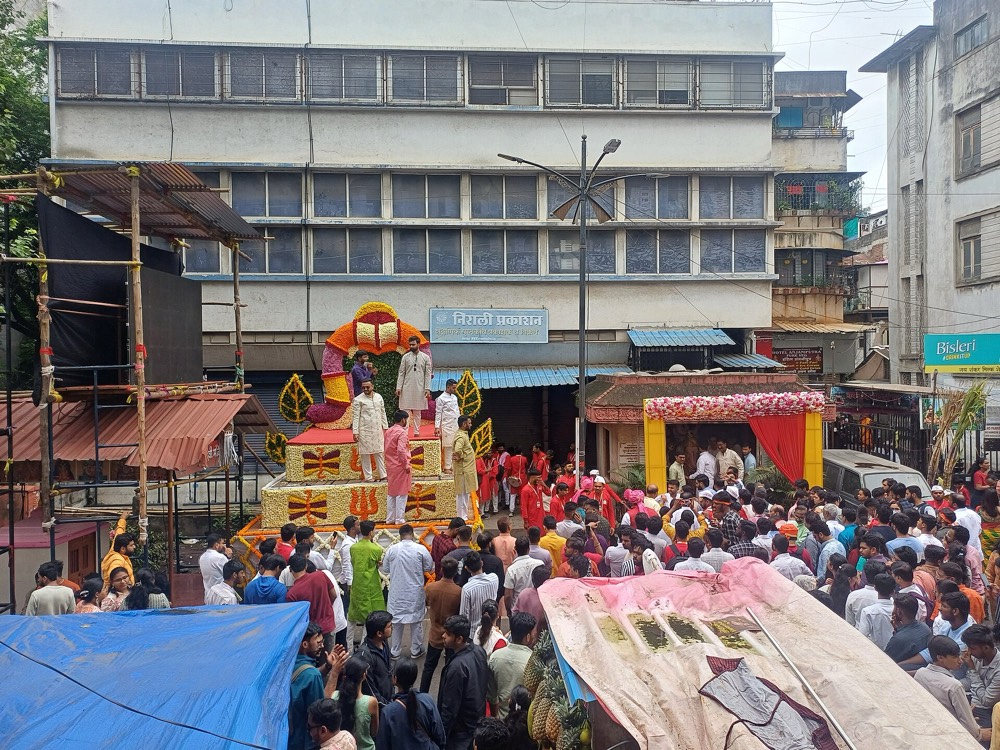
The third Manacha Ganpati — born from a talim tradition in 1887, before the sarvajanik festival itself, and a lasting symbol of Hindu–Muslim unity.
Budhwar Peth
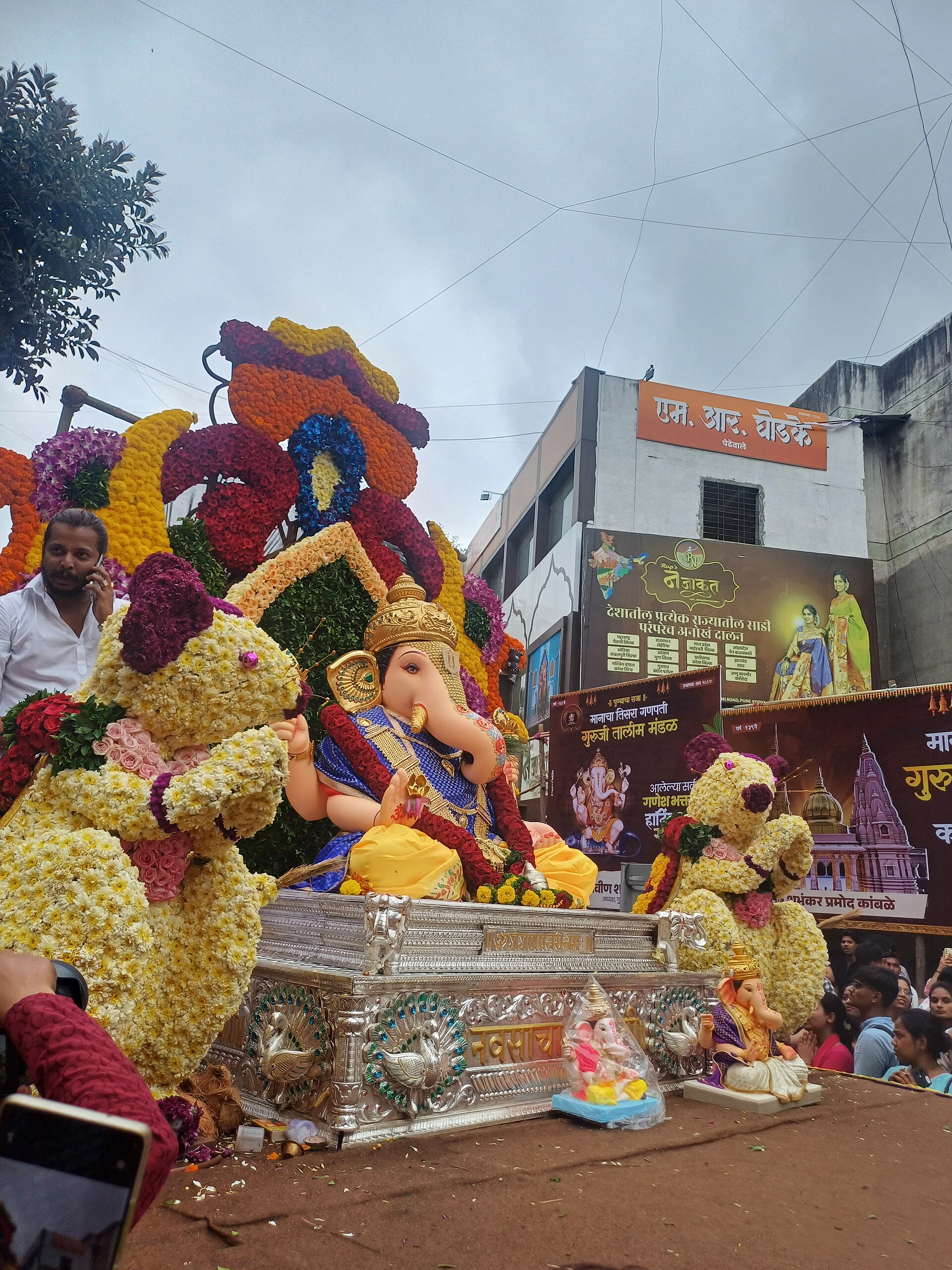
Pune’s ‘Navsacha Ganpati’ — the wish-fulfilling Ganesha at Ganpati Chowk, named for martyr Babu Genu and famous for spectacular temple-replica decorations.
Budhwar Peth
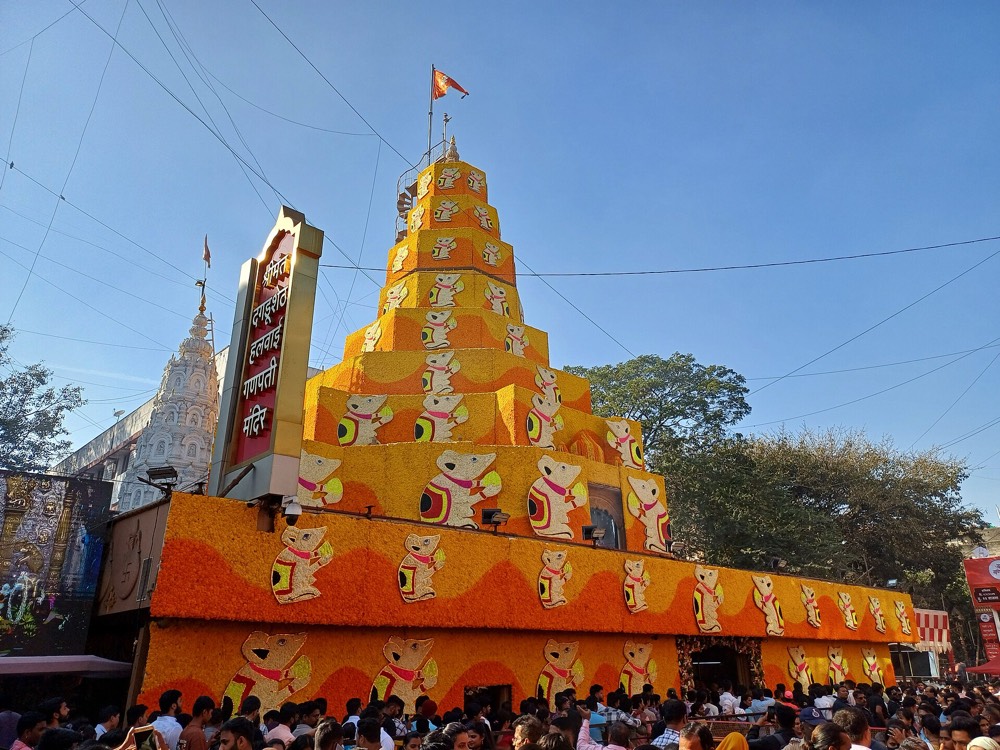
Pune’s most visited Ganpati — not Manacha, but the mandal lakhs of devotees picture when they think of the city at festival time.
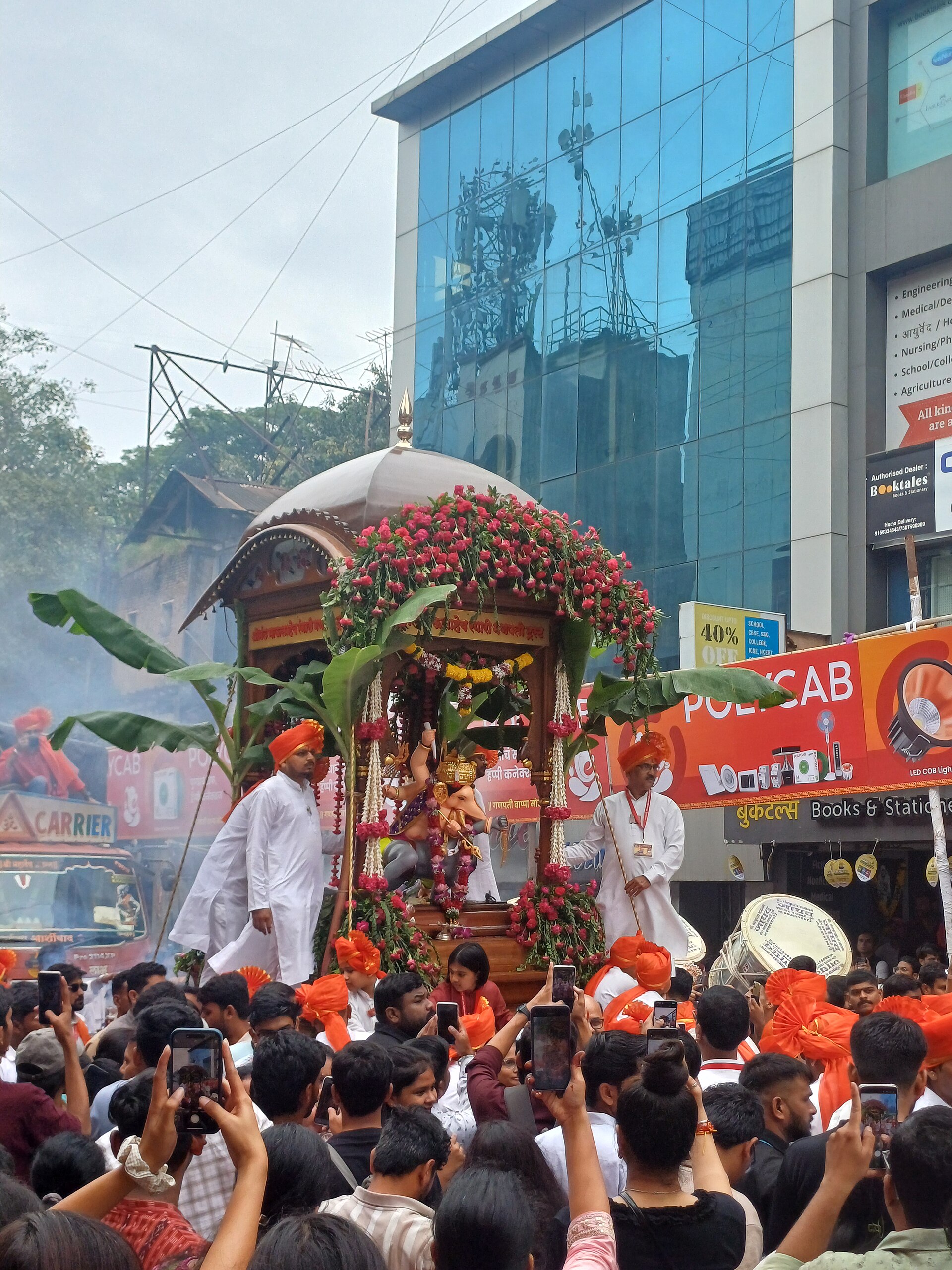
Budhwar Peth
Where India’s public Ganeshotsav began — the first sarvajanik mandal, sthapana 1892, with an idol of Ganesha slaying a demon that has never been replaced.
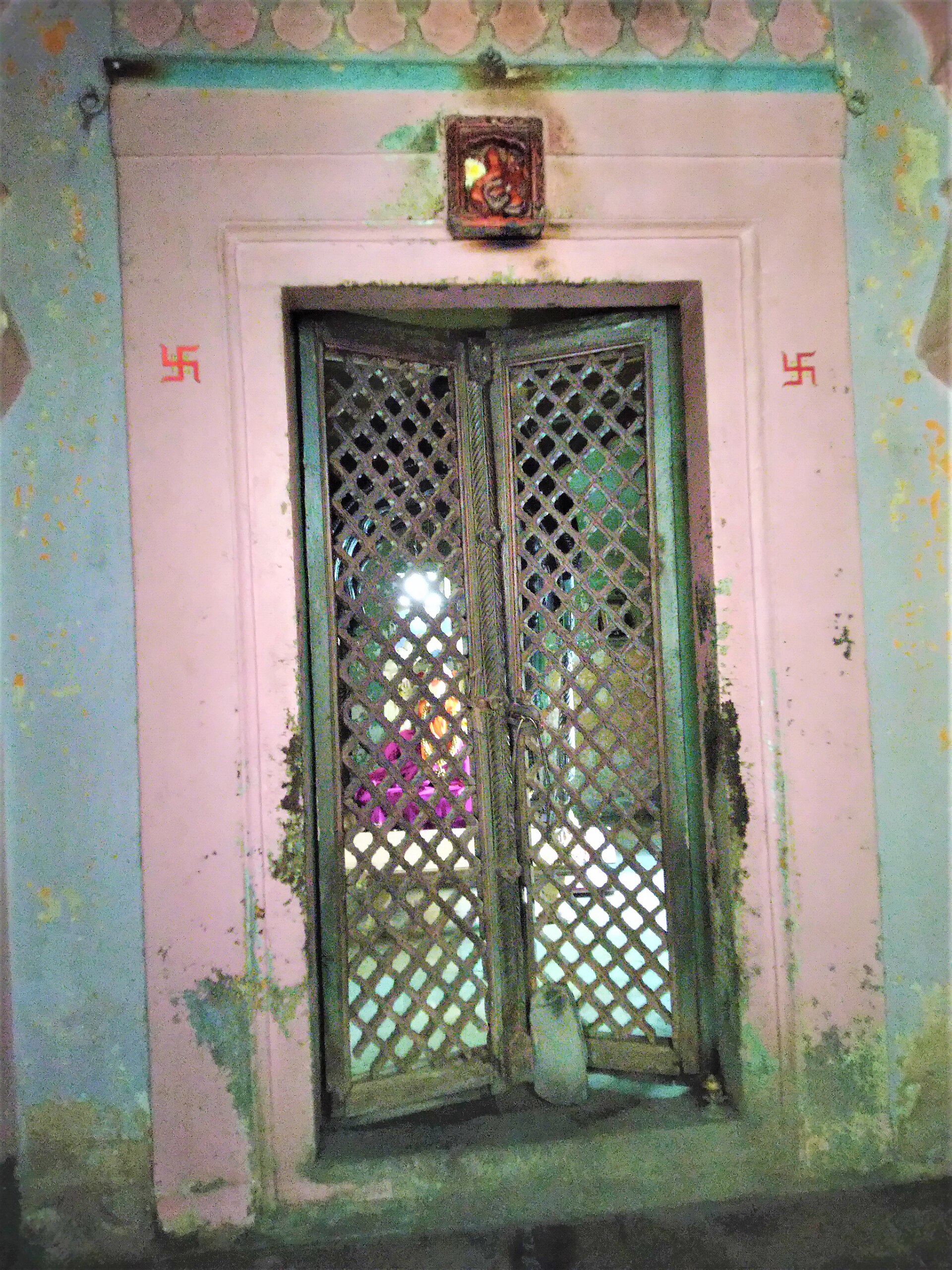
Budhwar Peth
The second of the three original sarvajanik Ganpatis of 1892 — installed at Ganpatrao Ghotawadekar’s home in the festival’s founding year.
No performances listed here yet. Follow a Pathak below to hear when one is announced.